Bringing a Baby Graflex Back to Life

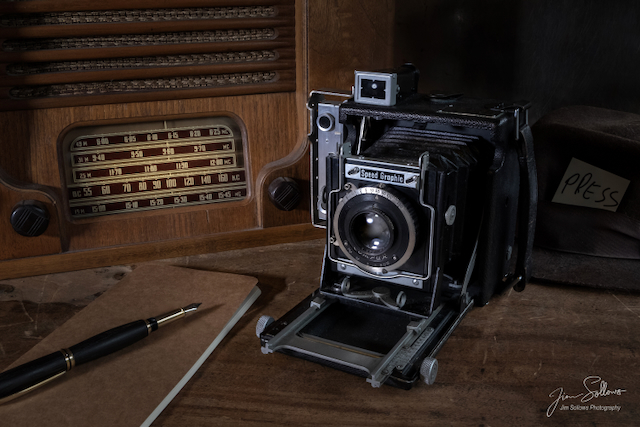
Some repairs feel purely mechanical. Others feel like opening a small door into the past. Replacing the ground glass on a Baby Graflex press camera — a compact little workhorse from the 1930s — sits squarely in the second category. These cameras were built for speed and clarity in an era when photography was still equal parts craft and improvisation, and their focusing screens were the quiet heart of that workflow. When the glass breaks, the camera doesn’t just stop functioning; it loses its voice.
49184544336 9564229c20 o

In this story, I walk through the process of fitting a new ground glass into a camera that has already lived several lifetimes. It’s a simple repair on paper, but one that rewards patience, precision, and a bit of reverence for the people who once relied on this machine. 

The focus screen on these old cameras is a special piece of ground glass that sits the same distance from the lens as the film. The photographer can use the ground glass to focus the camera and when it’s ready the film sheet is slid into position to capture the image.

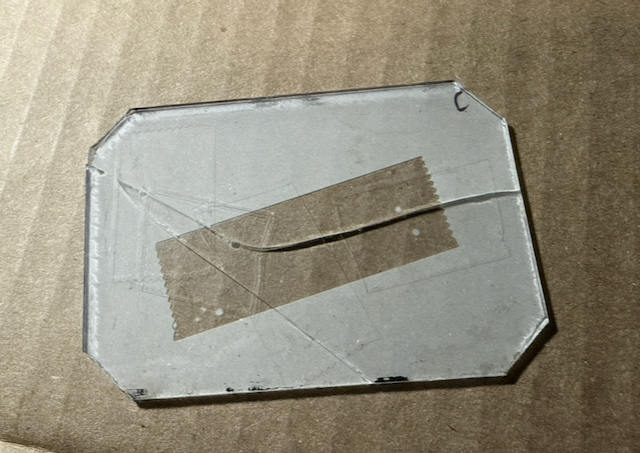
In this camera, somewhere over the past 90 or so years, the ground glass became damaged. 
IMG

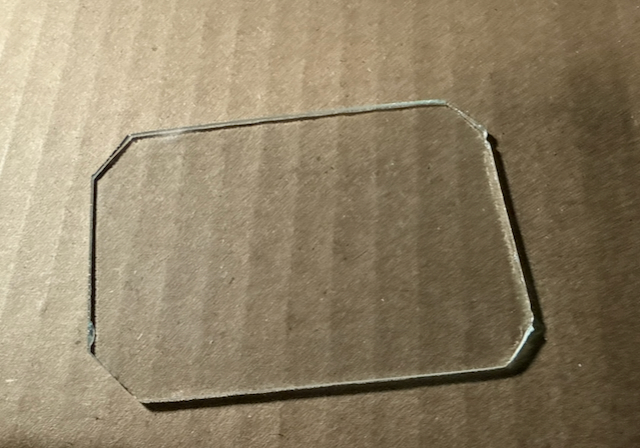
Today we will fix that! We start by cutting a new piece of glass to size and shape.
IMG

Of course, a plain piece of glass won’t work — light would simply pass straight through. The side facing the lens needs to be etched so it can act as a surface for the image to form. I start with an extremely fine diamond grit.
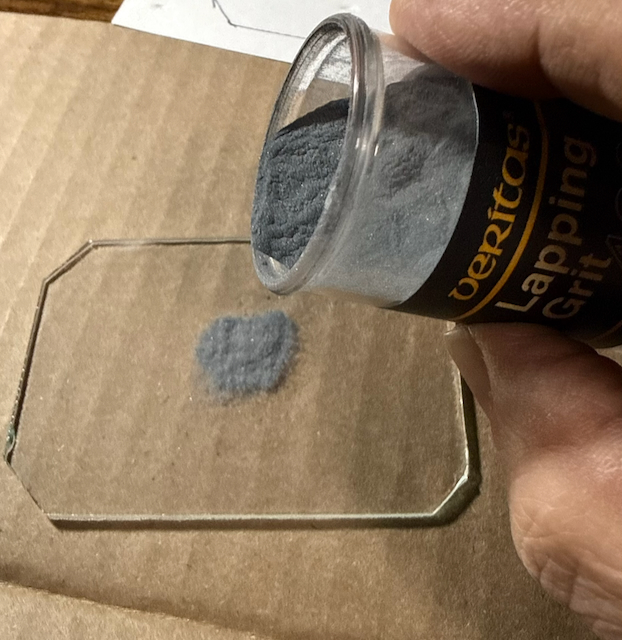
IMG

A bit of water turns the grit into a slurry.
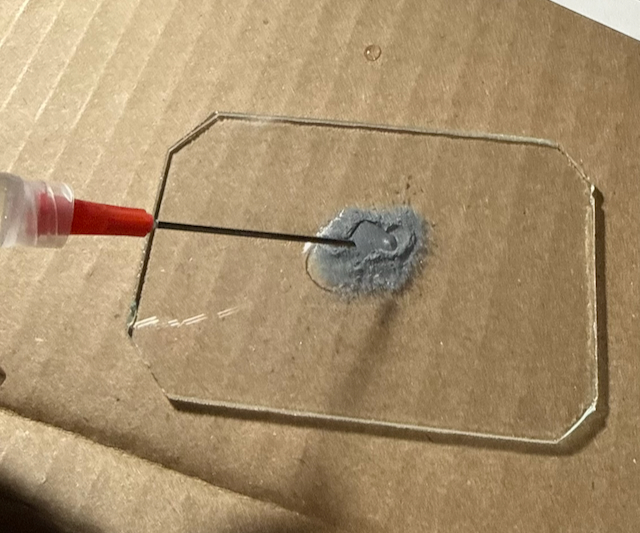
IMG

The slurry is then sandwiched between the new glass and another plate of glass attached to a handle. With steady pressure and a circular motion, the grit slowly grinds the surface. Over time, the new glass takes on an even, matte texture.

IMG

The grinding continues until the surface is perfectly even and the new glass takes on a translucency that matches the original.
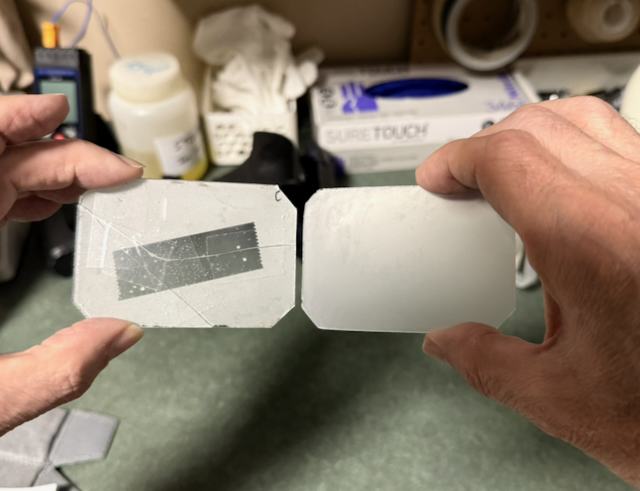
IMG

Now lets try it out

IMG

Yes — the image is supposed to be inverted. This is how photographers see the world on these vintage cameras: upside down and reversed. What matters is that the new glass is bright, and the focus snaps in cleanly.

With that, the 1939 Baby Graflex can go back to doing what it was made to do: making beautifully sharp images.

And if you’re wondering about the name, “Baby Graflex” refers to the film size — 5×7 cm — compared to its big brother, the Graflex Speed Graphic, which shoots 10×12 cm film.
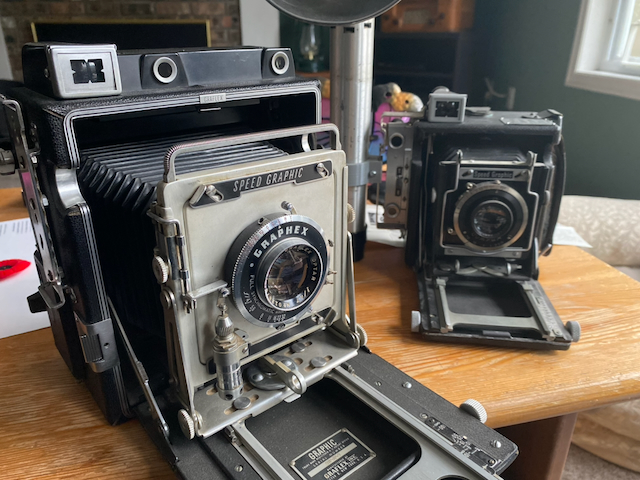
69967020136 0CE1657D 6A1E 4E72 B3FF BD93629EDB50

If you’ve ever wondered what it takes to keep these old cameras working, or you just enjoy seeing the inner life of a tool restored to purpose, this is a satisfying little journey.
Rescued From a 65-Year Sleep

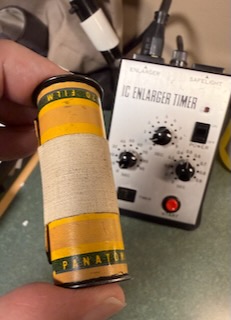
Recently I received a message from a friend at Switzers Vintage in Chilliwack British Columbia. He showed me a photo of an old roll of 120 film that had come into his possession. Knowing that I develop a lot of vintage film, he asked if I wanted to try and develop it. Of course, I said yes.

Several days later, I made the trip to Chilliwack to retrieve the film. Looking at the roll in my hands, my heart sank. It appeared the Kodak Panatomic film hadn’t been exposed. If it had been rolled through a camera, I’d be seeing the opposite end of the backing paper with the word Exposed. Instead, I was looking at the start of the roll, suggesting it hadn’t made a trip through a camera.

Img 1339 (1)

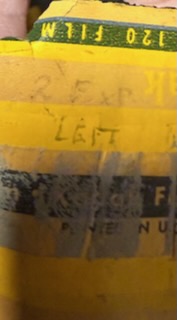
Back in my studio, I examined it more closely and noticed faint writing on the paper: 2 Exp Left. Could it be that the film was partially shot and then re-rolled onto the original spool to save the remaining frames for later? Not a simple process with many cameras, but fairly common among pros and serious photographers of the era. It was worth a try.

Img 1342

I then set about estimating the film’s age, which would help determine optimal development times. Panatomic was introduced around 1933 and remained popular into the early ’90s. This roll had a metal spool, not plastic, and the distinctive yellow-orange backing paper with simple text and no graphics. Most likely, it was manufactured in the mid-1950s, making it somewhere between 65 and 75 years old.

Next, I had to choose a development method. I immediately ruled out stand development, which tends to produce faint images on vintage film. These latent photos had been sitting for nearly 70 years, and they’d need a little extra kick. My developer of choice for very old film is Rodinal. It might introduce some fogging, but it excels at pulling out detail, which is more important. I used a longer fix time and a slightly cooler development temperature to help minimize fog.

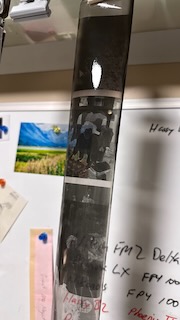
I mixed the chemicals and set the timers. Eventually, the film sat in the final rinse stage, and I prepared myself for disappointment: a blank, unexposed roll. The darkroom timer buzzed. I pulled the film out… and there were images. Only three, but they were there. I hung the film to dry.

Img 1343

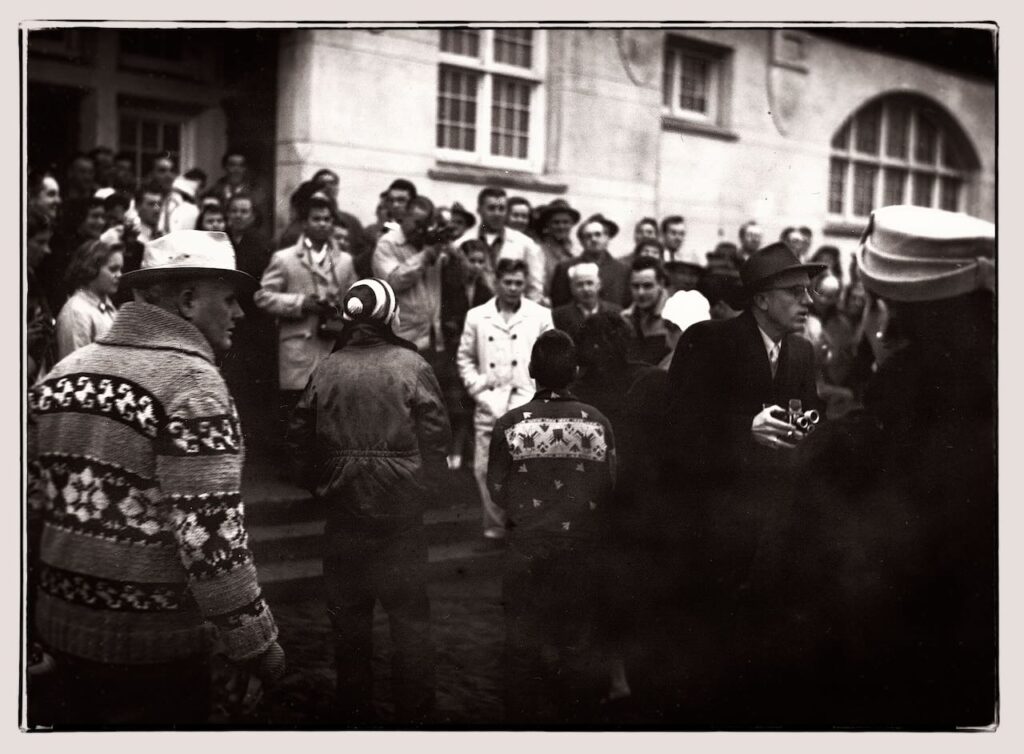
The last frame was a double exposure, but the first two were clear. One was a portrait of a young woman in front of a Christmas tree. The third image, however, was particularly intriguing.

From a roll of kodak panatomic film dating to the mid to late 1950's
From a roll of Kodak Panatomic Film dating to the mid to late 1950’s

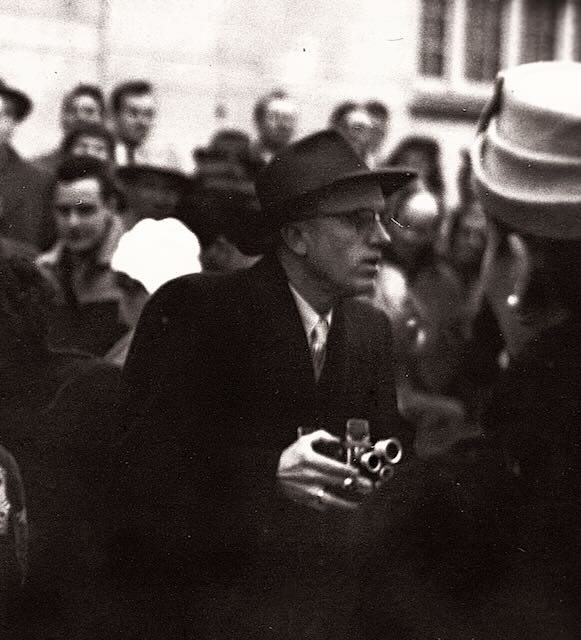
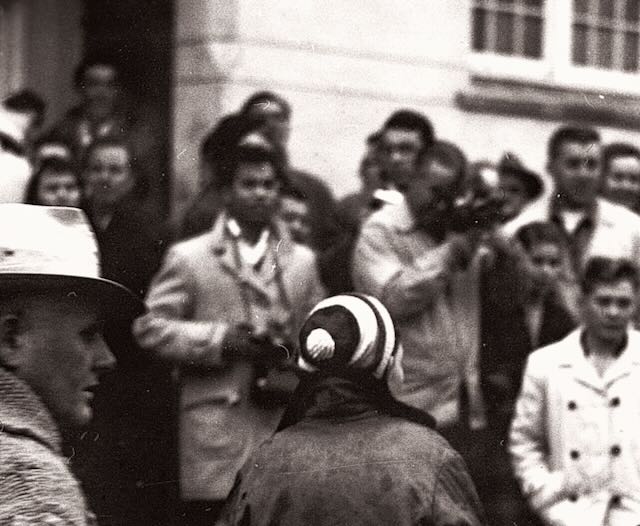
It appeared to be a public event. A man in a dark hat stood on the right, holding what looked like an 8mm movie camera, possibly a reporter? A couple of other photographers were visible in the crowd. The attire matched Vancouver in the 1950s, which aligned with where the film was found. But where was this scene, and what was happening?

From a roll of kodak panatomic film dating to the mid to late 1950's
Closeup of the photo showing the movie camera and photographer
From a roll of kodak panatomic film dating to the mid to late 1950's
Closeup of the photo showing the other photographers

I shared the image on social media and received a flood of responses. Many identified the location as the Vancouver English Bay Bathhouse. Comparing archival photos confirmed the match. But what was the event?

Some suggested the annual English Bay Polar Bear Swim, held every New Year’s Day since the 1920s. But the mood was off. There were no smiles, no shivering swimmers wrapped in towels. The crowd looked solemn.

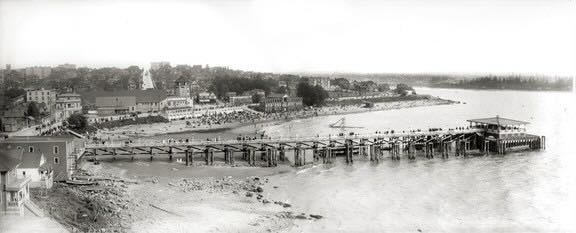
Then came a breakthrough. A few followers proposed it might be the demolition of the English Bay Pier, which was dismantled in 1958 due to decay and redevelopment plans. In January of that year, crowds gathered to witness its final moments.

English bay showing the Pier and behind it, the Bathhouse
Photo Source – Vancouver Archives CVA 677-95

I suspect that’s what we’re seeing. While the crowd watched the pier come down, the photographer turned their lens toward the onlookers, capturing not the spectacle, but the people witnessing it. A quiet inversion. A frozen moment of collective memory.

A few days later, I received a message from a follower. His father, now 91, had worked for Vancouver’s Public Works Department for over 40 years. He showed him the photo. Without hesitation, he said:

“Oh yes, I remember it. That was the day the pier came down.”

Photographic Plates from 1890’s Restored

I recently received a box of exposed photographic dry plates shot in the late 1800s. The plates, made by the M.A. Seed Dry Plate Company, are photographic negatives on glass since plastic didn’t exist at the time. We can date them because, in 1902, M.A. Seed became part of the burgeoning Eastman Kodak Company. Plates sold after 1902 would have borne the Kodak brand.

Remarkably, despite being around 130 years old, these plates have held up well. They were faded with age and showed some minor damage from handling and fungus. Each plate was meticulously cleaned and restored before being scanned.


Each plate was carefully inspected and cleaned using a solution that will not harm the delicate emulsion.

Once cleaned, each plate was placed on a special light source for digitizing negatives. The plate was then captured in a series of very close images spanning the entire surface of the plate. This resulted in a digital file equivalent to approximately 400 megapixels.

The focus peaking function (red) of the Fujifilm camera ensured extremely precise focus


Each high resolution digital image was then brought into ON-1 Photo Raw where it was carefully examined and using the wide variety of tools in ON-1 chunks of missing emulsion and scratches were repaired.

Finally each plate was printed to make a final hard copy of the image.

Here is a gallery of the plates. We don’t yet know who these people are. Their names may be lost to time, but we’ve had instances in the past where someone recognized a face, allowing us to eventually reunite the photographs with the descendants. It’s quite possible that these individuals were a family that lived in the Vancouver area around 1900.

If you have any tips or think you recognize anyone in these photos, please contact me.

Jim Sollows Photography
https://www.sollows.ca