Bringing a Baby Graflex Back to Life

Some repairs feel purely mechanical. Others feel like opening a small door into the past. Replacing the ground glass on a Baby Graflex press camera — a compact little workhorse from the 1930s — sits squarely in the second category. These cameras were built for speed and clarity in an era when photography was still equal parts craft and improvisation, and their focusing screens were the quiet heart of that workflow. When the glass breaks, the camera doesn’t just stop functioning; it loses its voice.
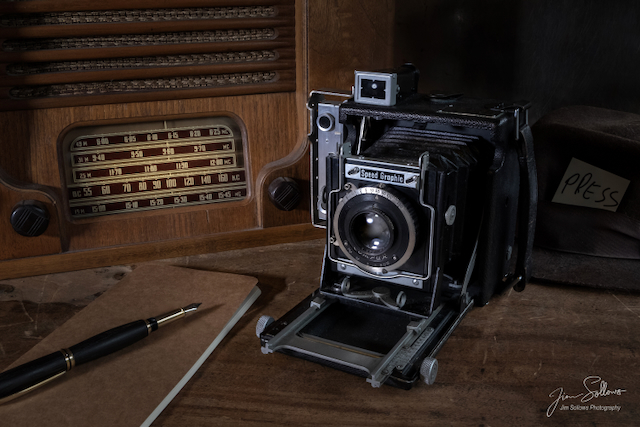
49184544336 9564229c20 o

In this story, I walk through the process of fitting a new ground glass into a camera that has already lived several lifetimes. It’s a simple repair on paper, but one that rewards patience, precision, and a bit of reverence for the people who once relied on this machine. 

The focus screen on these old cameras is a special piece of ground glass that sits the same distance from the lens as the film. The photographer can use the ground glass to focus the camera and when it’s ready the film sheet is slid into position to capture the image.

In this camera, somewhere over the past 90 or so years, the ground glass became damaged. 
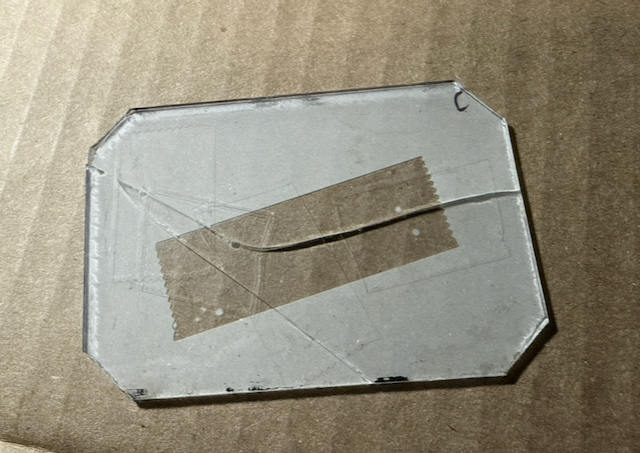
IMG

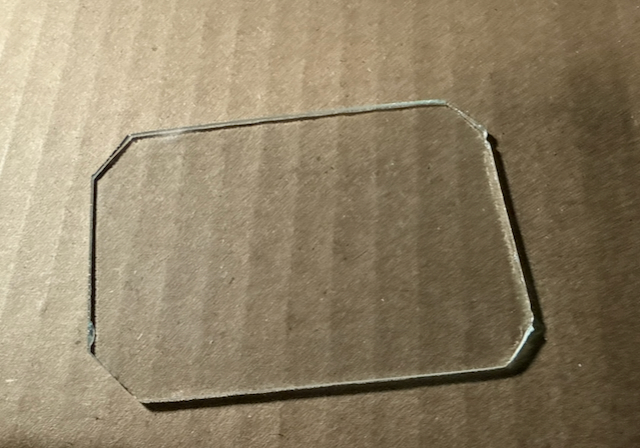
Today we will fix that! We start by cutting a new piece of glass to size and shape.
IMG

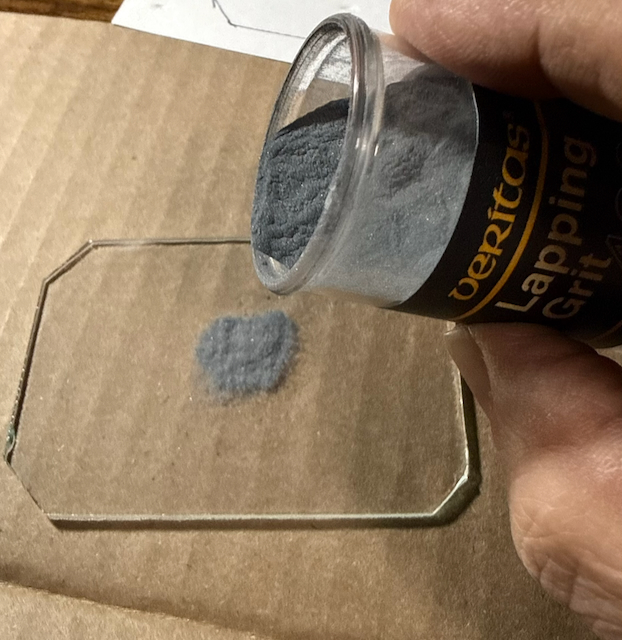
Of course, a plain piece of glass won’t work — light would simply pass straight through. The side facing the lens needs to be etched so it can act as a surface for the image to form. I start with an extremely fine diamond grit.
IMG

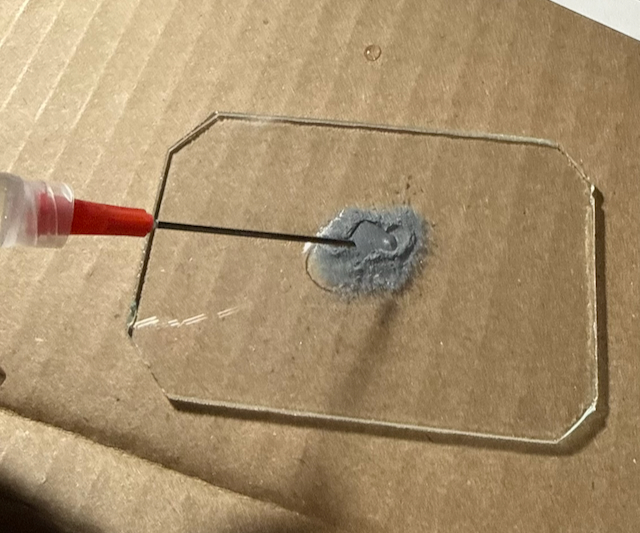
A bit of water turns the grit into a slurry.
IMG

The slurry is then sandwiched between the new glass and another plate of glass attached to a handle. With steady pressure and a circular motion, the grit slowly grinds the surface. Over time, the new glass takes on an even, matte texture.

IMG

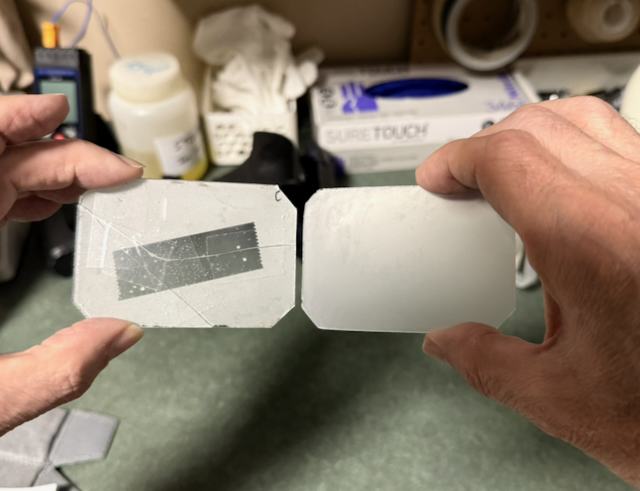
The grinding continues until the surface is perfectly even and the new glass takes on a translucency that matches the original.
IMG

Now lets try it out

IMG

Yes — the image is supposed to be inverted. This is how photographers see the world on these vintage cameras: upside down and reversed. What matters is that the new glass is bright, and the focus snaps in cleanly.

With that, the 1939 Baby Graflex can go back to doing what it was made to do: making beautifully sharp images.

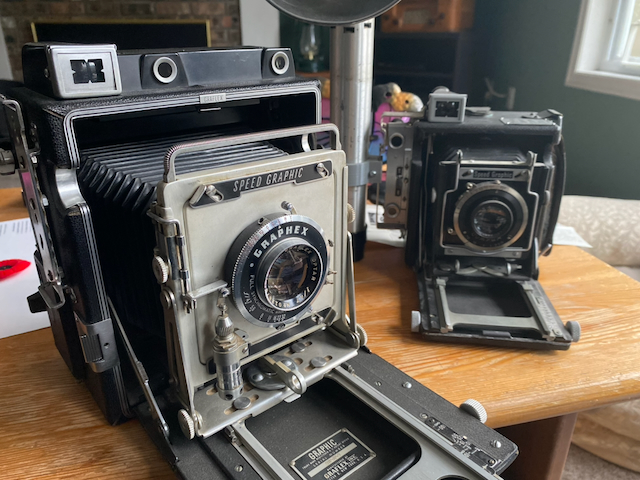
And if you’re wondering about the name, “Baby Graflex” refers to the film size — 5×7 cm — compared to its big brother, the Graflex Speed Graphic, which shoots 10×12 cm film.
69967020136 0CE1657D 6A1E 4E72 B3FF BD93629EDB50

If you’ve ever wondered what it takes to keep these old cameras working, or you just enjoy seeing the inner life of a tool restored to purpose, this is a satisfying little journey.
The CLA

“Clean, Lubricate, Adjust” Should Actually Mean Something

Written By: Jim Sollows
Date: October 17 2025

In the world of vintage cameras, three little letters, C-L-A, get tossed around more than a film canister at a camera swap. “Clean, Lubricate, Adjust” refers to a full mechanical and optical service meant to bring a camera back to near factory-spec performance. Unfortunately, somewhere along the way, the term has started to lose its meaning and become a marketing buzzword.

Scroll through any online marketplace and you’ll see it everywhere: “Recently CLA’d!” or “Just CLA’d and ready to shoot!” But more often than not, that so-called CLA is little more than a wiped-down exterior and a few shutter clicks to show it still makes noise. That is not a real CLA, and the kind of work that actually counts is not cheap, so you will not find it on bargain-bin cameras.

Screenshot 2025 10 17 at 11.32.39 pm
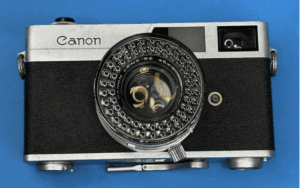
Fresh CLA !!! Canon Film Camera $20.00

Not long ago, I opened a camera belonging to one of my students. He had purchased it after being told it was “recently CLA’d,”. He contacted me because he was having trouble with a rough film advance. The exterior looked clean, but once I removed the top plate, I found dust, grime, and even a spider web. It was very clear evidence that the camera had not been opened in decades, if ever. 

A true CLA is a meticulous process. It means fully disassembling the camera to clean away old, hardened lubricants and applying the correct modern equivalents in just the right places and nowhere else. It also involves calibrating shutter speeds, replacing light seals, aligning rangefinders, and ensuring every moving part behaves the way the original engineers intended. It’s not a five-minute job; it’s a skilled task that takes experience, knowledge, and often specialized tools.

When sending a camera or lens for a CLA, it’s essential to choose a reputable professional who specializes in vintage cameras. The best technicians document their work, sometimes providing test data, photos of the process, or calibration notes. Just as importantly, they stand behind their work, offering a warranty or follow-up support if something isn’t quite right. This all comes at a price, a CLA is an investment, giving new life to your vintage gear.

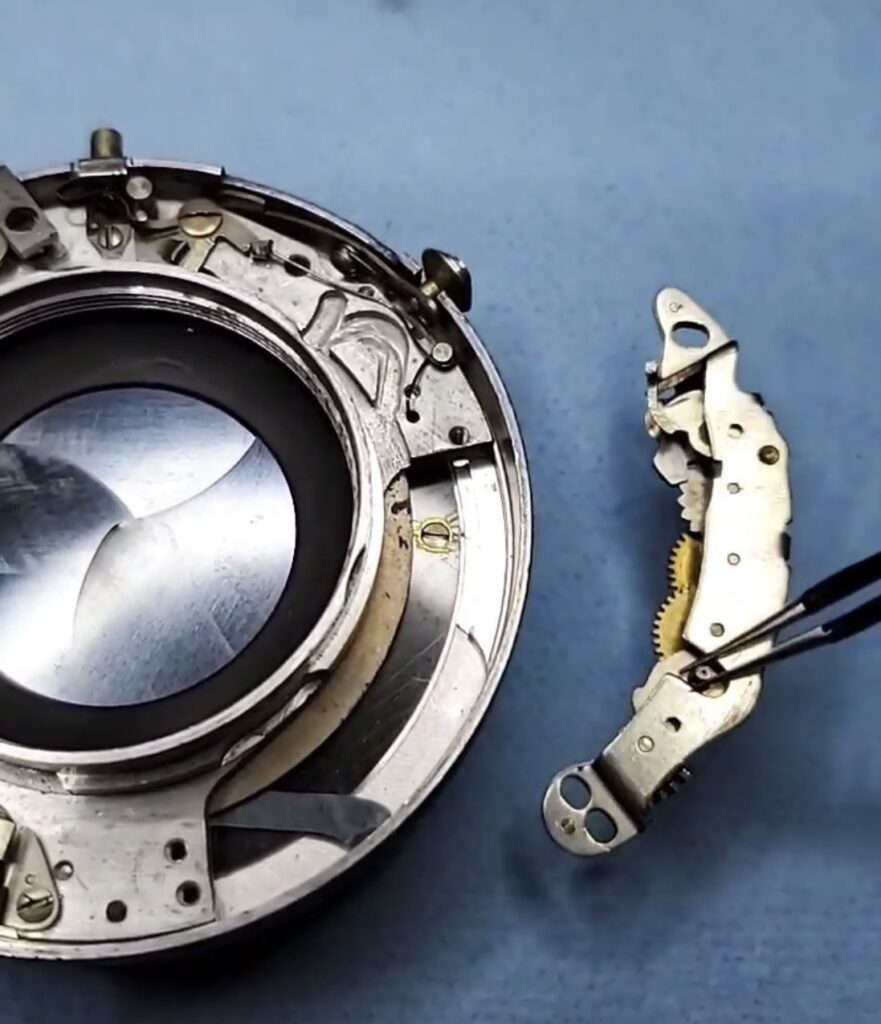
LensMedicYYC servicing a 90 yr old lens
Photo provided by LensMedicYYC showing his progress servicing my 90 yr old lens

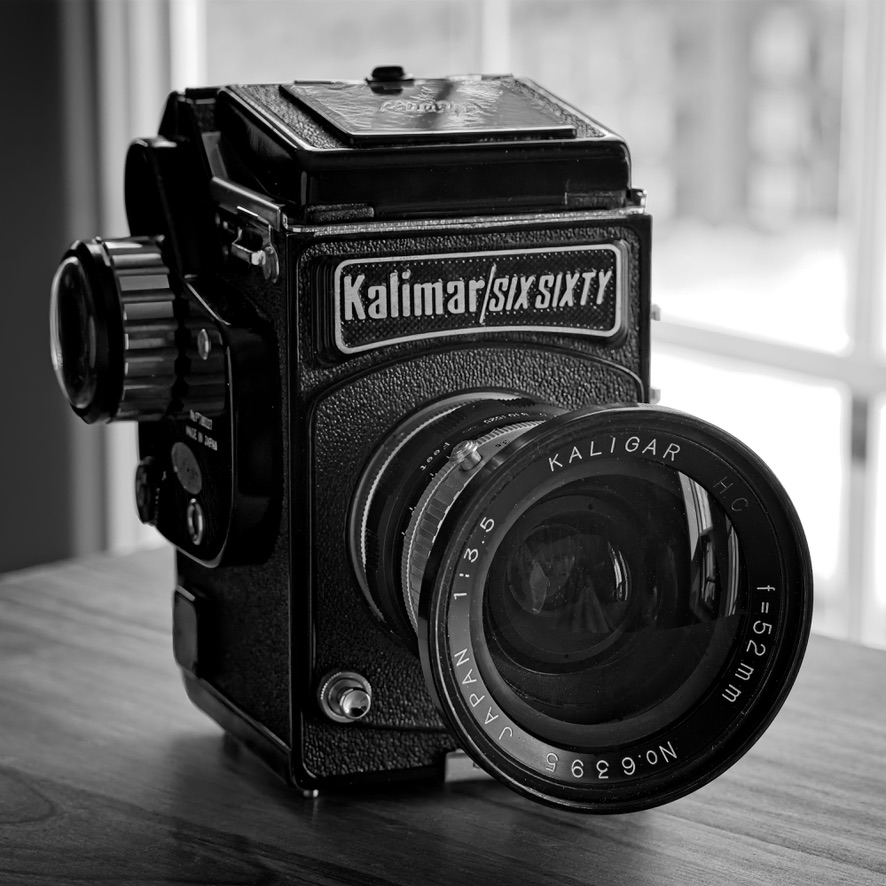
People often ask me to do a CLA on their camera. I can handle some basic service work, but I don’t have the skills needed for a full CLA. Many of my own cameras have been professionally serviced by my go-to technician, Gary at LensMedic YYC in Calgary. Gary has the skills, tools, and experience to do it right, and he’s never let me down. He recently CLA’d a very rare Kalimar Six Sixty medium-format camera. Even Gary admitted he had never seen one in person, yet his work was impeccable.

Kalimar six sixty
Kalimar Six Sixty

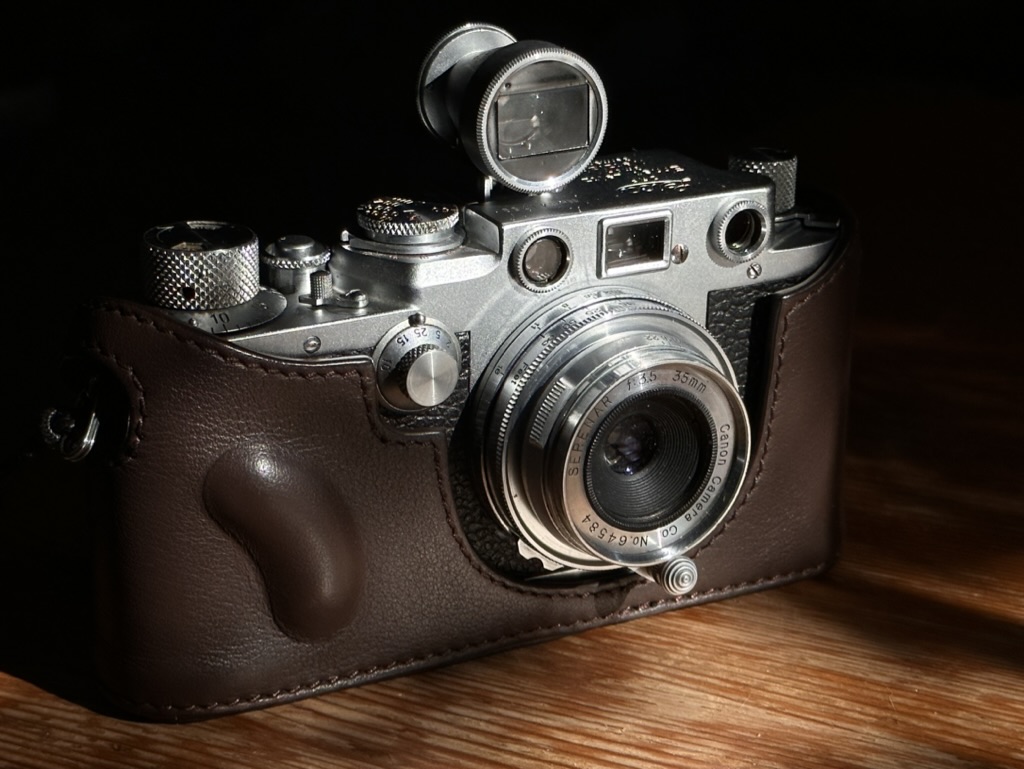
One of my most prized cameras, a 75-year-old Leica IIIF, recently went for a CLA. When it came back, it included a list of work that filled more than three pages. Every gear, spring, and screw had been inspected, cleaned, and adjusted. The shutter curtains were replaced, and all components that were out of spec were either restored to factory standards or replaced entirely. Because of the extent of the work and the need for camera-specific parts, I chose to have it serviced directly through Leica. The result was remarkable. The camera now looks and performs exactly as it did when it left the factory 75 years ago. Holding it, winding it, seeing the crisp clear viewfinder and rangefinder plus hearing that shutter snap feels like stepping back in time.

Leica iiif
Leica iiiF following CLA

When a camera truly receives a proper CLA, it shows. The shutter feels crisp, the advance is smooth, and the meter (if it has one) is accurate. Everything works as it should, often better than it has in decades.

The next time you see someone proudly claim their camera has been CLA’d, take it with a grain of salt unless there’s proof. In the world of vintage mechanical cameras, a true CLA isn’t just a marketing phrase. It is a way to roll back the clock, restoring a fine camera’s performance, preserving its craftsmanship, and keeping it shooting beautifully for decades to come.